




 +971 4 454 9700



When you apply for a business bank account in Dubai, the bank may send an officer to your office before it approves the account. The officer is not there to judge your furniture. They want to confirm that your company really operates from the address on your trade licence.
This guide explains why banks check, what the officer looks for, and how to prepare so the visit helps your application.
Why do banks check your business address?
Banks in the UAE are required to identify and verify their customers. The Central Bank’s rules list the registered address of a company as one of the core details a bank must collect, and they name registered lease or rental agreements and utility bills among the documents that can be used to verify an address (CBUAE Rulebook, section 6.3.1).
The checks are risk-based. A bank decides how far to go according to the type of customer and the level of risk it sees, which is why one company gets a quick approval while another gets a site visit.
The Central Bank also gives banks a list of warning signs for shell companies. Three of them relate directly to your office: an address used for mass registration, a post-box-only address, and no physical presence. The same list mentions having no employees or only one (CBUAE red flags, Annex 1). A visit is the simplest way for a bank to rule these out.
When is a site visit more likely?
Each bank sets its own policy, so there is no fixed rule. In practice, a visit becomes more likely when:
- The company is new and has no trading history in the UAE.
- The signatory or shareholders live outside the UAE.
- The address is a business centre, flexi desk or virtual office.
- The activity is one banks treat as higher risk, such as general trading, gold or virtual assets.
- The expected transactions are large, cross-border or cash-based.
- The address on the application does not match the licence or tenancy contract.
Banks can also visit later. They review customer information from time to time, so a check can come after the account is open, especially if your activity changes.
What does the bank officer look for?
The visit is usually short. The officer is trying to answer one question: is this company really here and doing what it says?
- Your company name at the address. A sign on the door, a name on the reception board or a listing in the building directory.
- Documents that match. The address on your trade licence, Ejari, tenancy contract and bank application should be identical, including the office number.
- A person who can explain the business. Ideally the signatory or a manager who can describe what you sell, who your customers and suppliers are, and how money will move through the account.
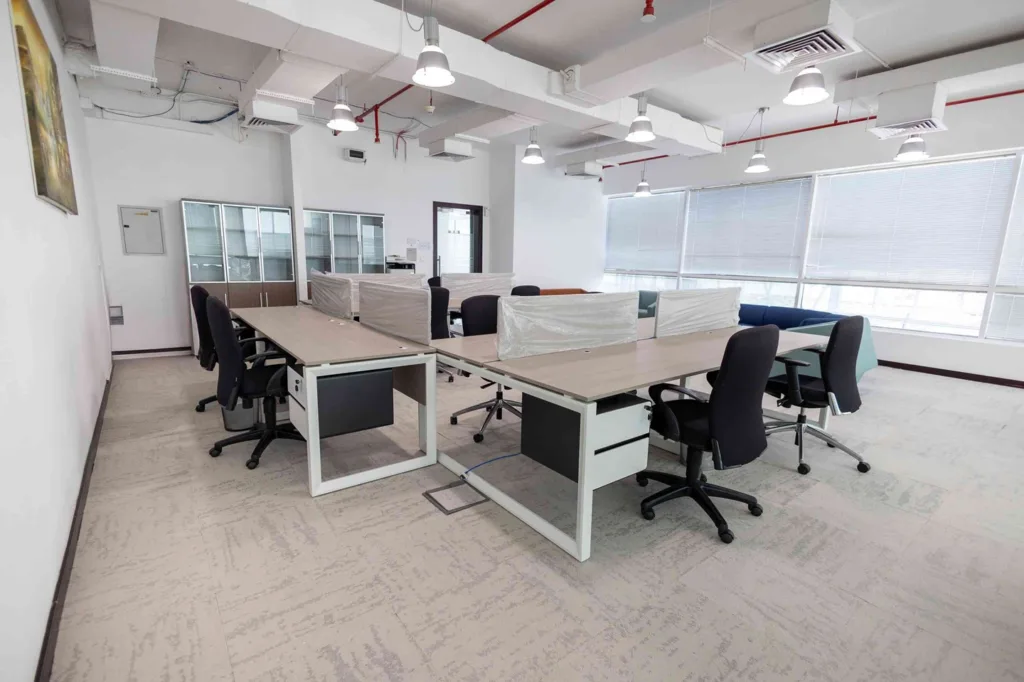
- Signs of real activity. Workstations in use, a computer, company files, and samples or stock if you trade goods.
- A team that fits the story. If your application mentions three staff, the officer will expect to see room for three people.
- An activity that fits the space. A trading company that claims to hold stock should be able to show where the goods are kept.
Some officers take photos of the entrance and the office to attach to the file. That is normal.
Virtual office, flexi desk or private office: which holds up best?
Banks decide case by case, and some accept a business centre address when the rest of the file is strong. The table shows how each arrangement looks from the bank’s side and what helps your case.
| Office arrangement | What the bank sees | What to have ready |
|---|---|---|
| Virtual office or business address | Your company name at a business centre address, with mail handling but no dedicated space | Your office agreement, a live website, signed client contracts or invoices, and a clear reason why a full office is not needed yet |
| Flexi desk with a registered tenancy | A shared workspace, with a tenancy registered for your licence | The office agreement and tenancy certificate, and a signatory present for the visit |
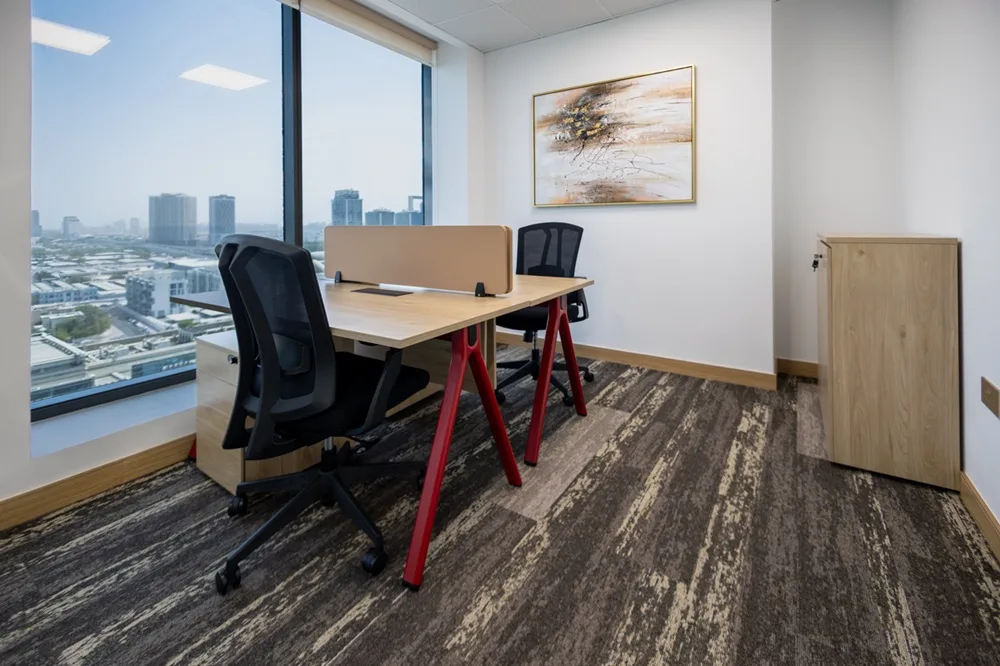
| Private serviced office with Ejari | A lockable office with your company name, furniture and staff working there | Ejari, office agreement, and the same address on the licence and bank forms |
| Traditional leased office | Your own premises, fitted out and run by your team | Registered lease, utility bills in the company name, and staff on site |
If you are starting with a virtual office, ask the bank before you sign whether it accepts that kind of address for your activity. If the answer is no, moving to a small private office is often quicker than arguing the point. Our guide to what a serviced office costs in Dubai sets out the prices at our three centres.
How to prepare for a bank site visit
- Make every address match. Check the trade licence, Ejari, tenancy contract, website and application form. Fix any difference before you apply.
- Put your company name at the door. Ask your business centre to add your name to the office door or reception board.
- Agree the date and tell reception. Let your business centre know when the officer is coming so they are met and shown to your office.
- Have a signatory there. Bring an Emirates ID or passport. If the officer arrives and no one can speak for the company, the application may be delayed.
- Keep one folder ready. Trade licence, memorandum of association, Ejari and tenancy contract, office agreement, company profile, and two or three signed contracts or invoices.
- Prepare a short explanation. In two minutes, say what you do, who pays you, where your money comes from and goes, and your expected monthly volume. Keep it consistent with the application.
- Answer plainly. If you do not have customers yet, say so and explain your plan. Overstating your business creates more questions later.
For the full account-opening process and the documents banks ask for, see our guide to opening a business bank account in Dubai and our 2027 business bank account guide.
What if the bank says no?
Ask the bank what was missing. A rejection often comes down to one gap, such as an address that did not match, no evidence of trading, or an office arrangement the bank does not accept for your activity.
Fix that gap, then apply again or try another bank. Policies differ between banks, and a file that one bank declines may suit another.
For context, the Central Bank expects banks to open accounts for low-risk SMEs within three business days once due diligence is complete (Gulf News, 2021). Higher-risk files take longer.
How Austria Business Center can help
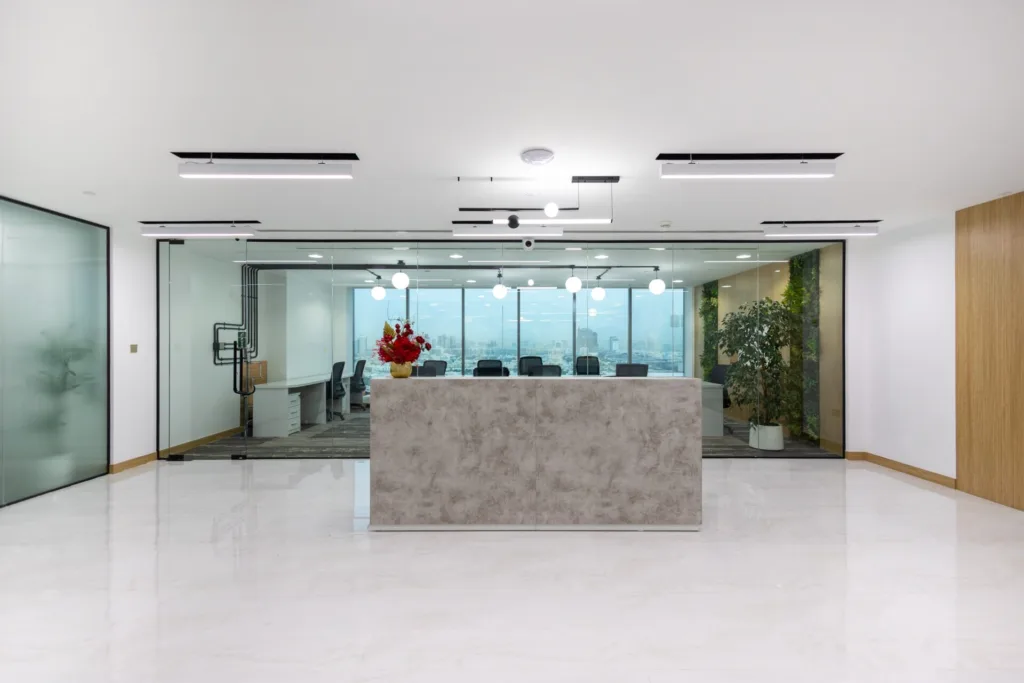
We run serviced offices in Dubai at The H Hotel, Concord Tower and Al Hudaiba Mall, with your company name on the office and a reception team to meet visitors.
Our Ejari services cover registration for your office, and our licensed office packages include a one-year Ejari for a mainland licence. You can register or renew Ejari through the Dubai Land Department, and our virtual Ejari guide explains when a virtual arrangement is enough.
If you are not sure which office suits your bank application, call +971 4 454 9700 or request a free quote. You can also book a tour of any of our three centres before you decide.

